ISLAMABAD:
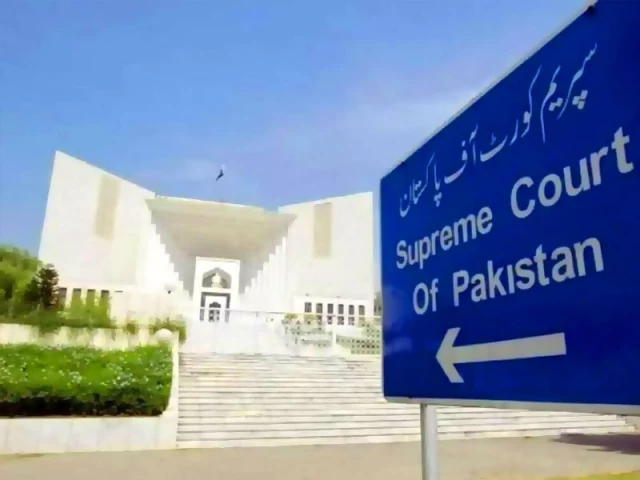
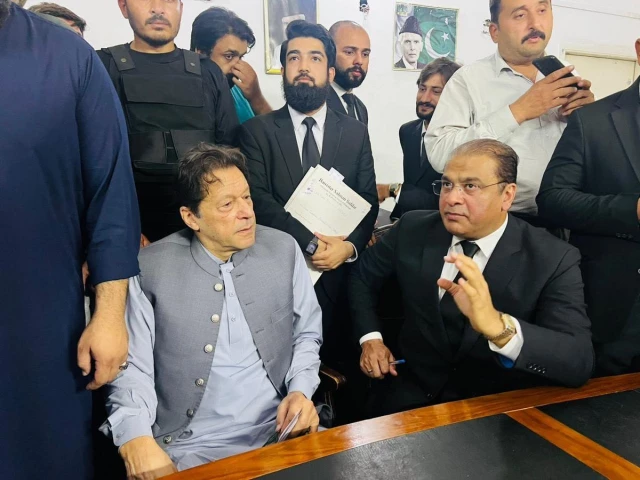
The Supreme Court of Pakistan on Thursday ordered that Pakistan Tehreek-e-Insaf (PTI) founder and former premier Imran Khan be granted access to his personal physicians in Adiala Jail and allowed telephone contact with his sons, Kasim and Sulaiman.
A two-member bench comprising Chief Justice of Pakistan Yahya Afridi and Justice Shahid Bilal Hasan heard the case. During the hearing, Chief Justice Afridi summoned Attorney General Mansoor Usman Awan to the rostrum and reviewed reports submitted to the court.
PTI leaders Senator Faisal Javed, Khyber-Pakhtunkhwa Chief Minister Sohail Afridi, Salman Akram Raja and Khan’s sister Aleema Khan also attended the court proceedings.
“The reports of the friend of the court (Barrister Salman Safdar) and the jail superintendent are identical,” the chief justice observed, directing the attorney general: “Please read paragraph number 21 of the report.”
According to the report submitted by Barrister Safdar, the PTI founder expressed satisfaction with the protective and security arrangements in jail. It further stated that he was satisfied with the food facilities available to him. However, the report noted that the PTI founder described the medical facilities as unsatisfactory.
The PTI founder is currently in state custody, the chief justice said, adding that all prisoners, including Khan, should receive equal medical facilities.
“We will absolutely not say that the PTI founder should be given preferential facilities compared to other prisoners,” the chief justice said. “Everyone should be treated equally,” CJP Afridi added.
Attorney General Mansoor Usman Awan said that they are ready to provide access to expert eye specialists.
Read: PTI-govt ice may be melting behind closed doors
“The government is in a good mood; the PTI founder should also be given the facility of telephone contact with his children,” the chief justice said.
On Tuesday, the Supreme Court appointed Safdar as a friend of the court to submit a report on Khan’s living conditions at Adiala Jail. Safdar said he met with the PTI founder and also visited his cell as per the court’s orders.
The report itself, Safdar revealed, consists of seven pages and 22 paragraphs, and has been submitted to the Supreme Court. “My first responsibility was to submit the report,” he said, stating that he had fulfilled his duty. He added that he praised Attorney General Mansoor Usman Awan in the report, and has also commended the administration of Adiala Jail.
The report on the facilities available to the PTI founder in jail had recommended an immediate eye examination. The PTI founder requested that he be examined by his personal doctors, Dr Faisal Sultan and Dr Asim Yousuf, the report said.
It also recommended that his medical examination could be conducted by any specialist doctor. The report suggested that books be provided to the PTI founder, citing his solitary confinement and lack of access to television.
In the report, Safdar recommended that immediate and effective steps be taken to control mosquitoes and insects in the jail cell of Imran Khan. The report also suggested that a refrigerator be provided to preserve food in the PTI founder’s cell.
“These are basic and essential measures necessary for human habitation, and no flexibility should be shown regarding them,” the report said.
Imran Khan told Safdar that he has been in custody for two years and four months, according to the report. He said that until October 2025, his vision was “6×6,” but later it began to blur. The report noted that his right eye gradually worsened, eventually reducing his overall vision.
Khan indicated that he had been told he had a blood clot and appeared visibly concerned about the deterioration of one eye. During the meeting with Safdar, tears continued to flow from his eyes, which were repeatedly wiped with tissue paper. “This process caused him discomfort,” the report added.
Imran Khan detailed his daily routine, medical history, and living conditions in jail during the meeting with Safdar, according to the report. He said that given his age, “regular blood tests should be conducted.” He also noted that for three months, his treatment was limited to eye drops, which “provided no benefit,” the report added.
The PTI founder described his daily routine, saying he has breakfast at 9:45am and spends an hour reading the Quran. For physical exercise, he has access to limited equipment, including an exercise machine and nine-kilogram weights.
He said he stays in his cell from 5:30pm until 10am, and his breakfast includes coffee, porridge, and some dates. The report stated he is allowed to select his meals for the week and pays for them personally. His weekly diet includes chicken for two days, meat for two days, and pulses or chaat/sandwiches for two days. Bottled water from Nestlé is provided in his cell.
“At night, I do not eat a full meal. I eat fruit, drink milk, and have dates,” he told the court-appointed observer.
Khan said the cell has adequate air and lighting, but he is not permitted to keep knives, forks, or utensils inside.
The PTI founder reportedly expressed satisfaction with the cleanliness and basic facilities in his jail cell, according to the report. The report noted that a jail attendant is assigned to assist with laundry and general cleaning. “The attendant is also responsible for the washroom and the upkeep of the cell,” it added.
Imran Khan confirmed his approval of the arrangements, stating he is satisfied with the cleanliness of his cell.
During the cold season, he has access to a small heater and a blower, and warm water is available at all times.
“These are essential arrangements, and I am content with them,” the report cited him as saying.
Khan shared details of his living conditions in prison, highlighting health, environmental, and access concerns, the report said.
He told officials that during the summer months, he faces extreme heat and humidity, in addition to the presence of mosquitoes and insects. “I use mosquito repellents to protect myself,” he said. The report noted that a room cooler is also available to help him cope with high temperatures.
The PTI founder disclosed that he has suffered from food poisoning two to three times during the summer months. He also reported that approximately 10 surveillance cameras are installed near his cell, with one camera positioned outside the shower area, but none inside the room. “I have no objection to the cameras as they are for my protection,” he stated.
The report highlighted restrictions on family and legal access. The founder said he has not met his lawyers for the past five months, and visits from his family have been limited. Since a change in the jail superintendent, he has been allowed a single 30-minute visit with his wife each week, on Tuesdays. In 2025, he was able to speak by telephone with his sons, Kasim and Sulaiman, on only two occasions.
He also mentioned that a 30-by-12-foot green area is available near his cell for sunlight exposure. The founder has access to a 32-inch television, though it is currently not operational, and around 100 books are available for reading.
The report provides a detailed account of the challenges faced by the PTI founder in maintaining health, safety, and family connections while in custody.
Imran Khan has not had a dental check-up for two years, the report stated.
The report stated that Imran informed Safdar that his right eye is functioning at only 15 percent capacity.
The chief justice, in today’s order, said they were not recommending the provision of books to the PTI founder for reading because of his eye condition.
“As soon as possible, the PTI founder should be given access to specialists and telephone contact with his children,” the Chief Justice said.
The attorney general assured the court that access to eye specialists and telephone contact with his children would be provided by February 16, in accordance with the court order.
During the hearing, Friend of the Court Salman Safdar had requested that the PTI founder be allowed to consult expert eye doctors in the presence of a family member. The SC rejected this request, “We cannot pass such an order,” the chief justice said.
Salman Safdar also requested that more books be provided to the PTI founder. “If doctors permit, books may be provided,” the chief justice replied.
The SC bench also emphasised the importance of ensuring proper medical care for the PTI founder, while also directing that he be allowed telephone contact with his children.
“Health is the most important issue,” CJP Afridi said. He added that intervention was needed in the matter and that the government’s position on healthcare provision must be clarified.
Attorney General Mansoor Usman Awan said that providing medical facilities was the responsibility of the state. “If the prisoner is not satisfied, the state will take necessary steps,” he told the court.
The chief justice also highlighted the significance of communication with family members. “The issue of telephone calls with children is also important,” he said. “We are placing our trust in the government,” he added, noting that the administration was “in a good mood” to address the concerns.
The Supreme Court directed that a team of doctors be formed for a medical inspection and that the PTI founder be allowed to speak with his children. Both measures are to be implemented before February 16.
The apex court also commended Barrister Safdar for his role as Friend of the Court in proceedings concerning the PTI founder. “He [Salman Safdar] has fulfilled his responsibilities exceptionally well,” CJP Afridi said.
“We appreciate the role of the Friend of the Court,” he added, also praising the government for providing the best possible facilities.
Speaking to the media, Barrister Safdar said he had received over a hundred calls and messages, including from his wife.
“I said this is the court’s trust; I cannot disclose it,” he said. “I did not even tell my wife,” he added.
At the start of the hearing, Latif Khosa appeared on the rostrum.
“You do not understand; the appeal regarding Toshakhana has become ineffective,” the chief justice said.
Khosa responded that if viewed normally, this point is correct. He added, however, that in one petition, defence witnesses were being summoned, while in the other, the request concerned a case transfer. “Under specific circumstances, the court can examine this matter,” Khosa said.
“My advice would be that the relevant forum should hear the case,” CJP Afridi said.
“The main appeals in the high court are still pending, and all interim orders have been consolidated,” Justice Shahid Bilal Hasan noted.
CJP Afridi added that they cannot exercise the powers of the appellate court.
“You, as the head of the judiciary, can consider the matter in light of specific circumstances,” Latif Khosa said.
“We have full respect for the high courts,” the Chief Justice added.
Later, the Supreme Court reserved its decision on the appeal against the trial in the Toshakhana criminal case involving the PTI founder.
During proceedings, lawyer Latif Khosa presented arguments, while the chief justice noted that the legal aspects of the appeal would also be reviewed. CJP Afridi observed that the petitioner had challenged the jurisdiction of the trial court, adding that the trial court’s verdict has now been delivered and appeals against it are still pending.
The chief justice questioned whether, under these circumstances, the case had effectively become “ineffective.” Latif Khosa responded that if it were a normal case, it could be considered ineffective.
The court also discussed whether ruling on the legal status of the case could impact the parties involved. Khosa highlighted the issue of whether “time should be restored,” to which the chief justice emphasised that the Supreme Court would not act as an appellate court and must respect the jurisdiction of the high court.